Can you identify this turfgrass problem?
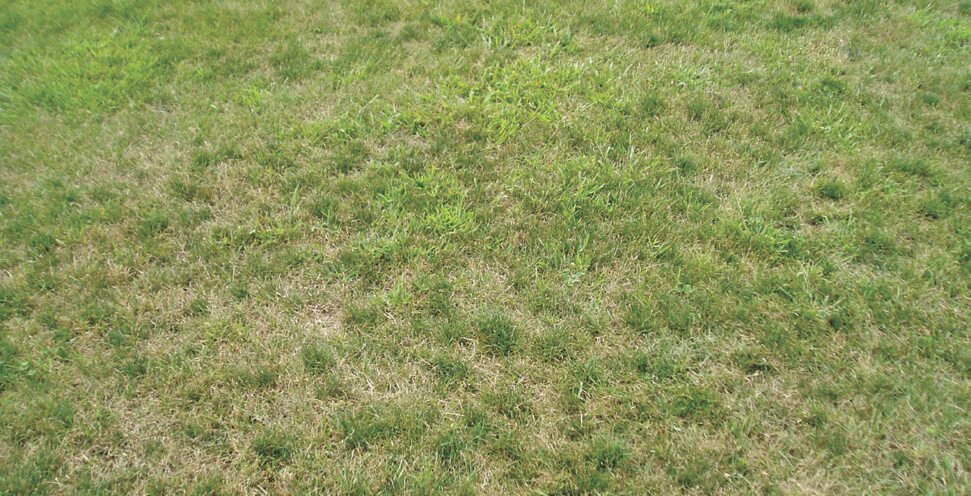
Problem: Dead Kentucky bluegrass, and live perennial ryegrass and crabgrass
Turfgrass Area: Baseball outfield
Location: Ohio
Turfgrass Variety: Kentucky bluegrass, perennial ryegrass and crabgrass
ANSWER:
The reason this baseball outfield in Ohio has dead Kentucky bluegrass while the perennial ryegrass and crabgrass are still alive and thriving is because of insect activity. Bluegrass billbugs and lesser billbugs seem to prefer Kentucky bluegrass over perennial ryegrass and especially over crabgrass. Billbug damage can resemble drought stress; and destruction of turfgrass crowns, especially during periods of drought, often escapes detection, which can result in extensive turf death. Damage to turf is caused by the larval stage of this billbug, as they burrow down through the grass stem toward the crown and roots of the turf plant and eat the base of the plant, leaving behind their poop (fras) as a telltale sign of infestation. Performing the tug test (literally tugging on the bluegrass) showed that the plant detached from the roots, and billbug fras and larvae were visible. Since ryegrass and crabgrass were able to be identified and noted to remain green — as they are not on the billbug’s preferred menu — the diagnosis was able to be made quicker and additional turfgrass loss was prevented. This demonstrates the importance of proper grass identification while looking at problem areas.
Photo submitted by Pamela J. Sherratt, turfgrass specialist at The Ohio State University in Columbus, Ohio, and recipient of SFMA’s Dr. William H. Daniel Founders Award in 2003 and 2018.
John Mascaro is president of Turf-Tec International
If you would like to submit a photograph for John Mascaro’s Photo Quiz, please send a high-resolution digital photo to John Mascaro via email at john@turf-tec.com. If your photograph is selected, you will receive full credit. All photos submitted will become property of SportsField Management magazine and the Sports Field Management Association.