Ed Karpus Field
Thomas Dale High School, Chester, Virginia
AS THE TECHNOLOGY BEHIND modern field builds is constantly evolving, we are still working with a playing surface foundation that is 60 years old. As innovations in smart control irrigation and Cambridge drainage evolve, we have an outdated hydraulic irrigation system with crown and slope surface drainage into direct inlet basin drains. We manage predominantly a common bermuda base with a few new cultivars mixed in. With all of this said, we have learned to take what we have and make the absolute best playing surface for our student athletes. The largest obstacle to overcome with our field is the sheer hours of use our field endures without any breaks, as we are managing a very old field and playing surface. Spring sports begin the first of March with boys and girls soccer and lacrosse. Fall sports like football and field hockey start in mid-August, as well as PE classes, unified bocce, and we also hosted a countywide marching band exhibition. It is not out of the ordinary for PE students to be on the field for four hours during school, then games played on the field that evening. After daylight saving ends, our football team will move daily practices on the field due to not having lights on their practice field. The amount of work our students put into this field is second to none. They are learning new approaches to field management; and how to adapt and improvise with heavy field usage, minimum budget, and very little industry-standard equipment. We take every approach to create a safe playing surface that can rival a higher-level field with a larger budget and better equipment. We are excited to share how hard work and determination can pay off to provide our student athletes with the best possible playing surface. Our class mantra is “Today someone will see your work for the first time.” Work in turf management creates a safe playing environment for athletes, and something pleasing for spectators to observe. Grass is never just grass — it serves a larger purpose. It is exciting to see students progress from a point where they might not have seen this as a career opportunity, to committing to what we do, and finally developing a passion for this field and becoming a lifelong learner.
– Bryan Sheetz, landscaping/turf management teacher
Level and category of submission: Schools and Parks Sporting Grounds
Field manager: Bryan Sheetz
Title: Landscaping / turf management teacher
Education: Bachelor of music
Original facility construction: 1965
Turfgrass: Common bermuda, Riviera, 419
Overseed: 10 lbs. of perennial per 1,000 sq. ft. each fall
Rootzone: Sandy loam
SportsField Management (SFM): Congratulations on the Field of the Year win. What are you most proud of with this win?
Bryan Sheetz: The SFMA Field of the Year award means a great deal to me. I have been so blessed to have a great team to work with at Thomas Dale and Chesterfield County Public Schools. Being recognized by our peers and the community for our hard work means a lot, and I cannot say enough about the kids that make our program so amazing. The playing surface that our student-athletes compete on can easily be overlooked and taken for granted. In a time when many localities move to synthetic turf, we have worked an old field to prime playing conditions that other teams talk about throughout the district. We work tirelessly and collectively to ensure Ed Karpus Field is second to none in safety, playability and aesthetics. We strive to have a field looking like it has never been played on with a surface that our teams have confidence in for them to play at their very best.
SFM: What were the biggest challenges you have faced with the winning field, and how have you approached those challenges?
Sheetz: The number one challenge we face is how much the field gets used. During the school year the field gets used almost every day during the growing season for physical education classes, football, field hockey, soccer and lacrosse. We typically spray out the ryegrass the first of June and start pushing the bermuda for fall sports through the summer. Having so many hours on the field also makes nutrient management planning tricky as well. We have to be very exact with our timing in order to get our applications down in between activities. We try to prioritize our levels of maintenance based on season and the intended purpose of the field. For example, fall is football and field hockey where the entire field has divot repairs all season. For spring sports, such as soccer and lacrosse, we are constantly dealing with goal mouths and compaction. We work very closely with our school’s athletic director with applications and cultural practices that will create the safest and most aesthetically pleasing field in central Virginia.
SFM: Please detail for us the involvement of your students in the management of this field, and the benefits of the hands-on experience it provides for their turfgrass education.
Sheetz: In 2021, the program was born with the simple idea of creating a curriculum focused on hands-on experience in the green industry. There was a significant shift from the county’s traditional agriculture / horticulture focus to landscaping and turfgrass management, where jobs all over Virginia were blossoming. Now, five years into the program, enrollment has skyrocketed as students gain a new passion for the turfgrass industry and take pride in their work.
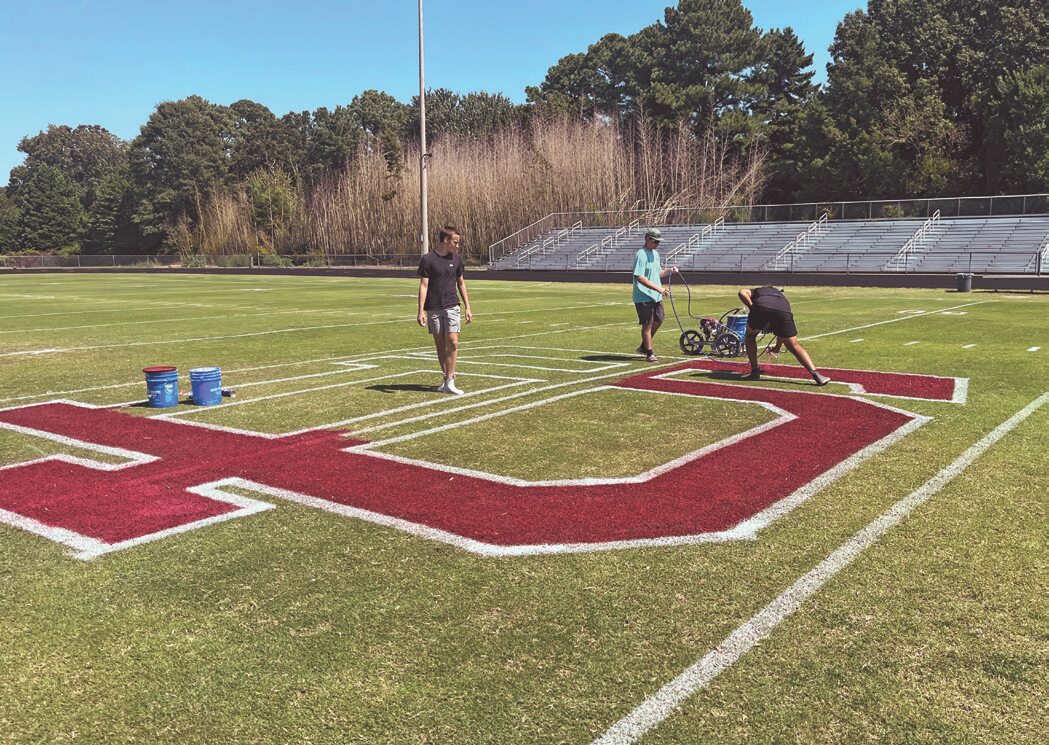
As in all Career and Technical Education frameworks, the class is split between classroom and lab lessons. Classes are driven by workplace readiness skills and work-based learning opportunities. Students have many opportunities within the industry, whether it is the paint crew for that week’s games, mowing patterns, or setting up for special events. Students learn how to use proper techniques and maintain a safe workplace environment. All students are a part of an effective learning environment that becomes their own space of creativity where they can thrive.
The program has been very successful at setting up students with internships and jobs postgraduation. Close collaborations between the school and employers directly helps students obtain internships and jobs. Over the last two years, students from this program have worked with the Richmond Flying Squirrels, Richmond Kickers, Chesterfield Parks and Recreation, and various golf courses around the Richmond area. Students are expected to take ownership of their education. This program empowers them to make their own work decisions, whether it is a simple decision such as a mowing pattern, painting various boundary lines for different sports, or creating the stencil for our football field for the entire season. Students take pride in their work, and this is creating more than just a field. Work in turf management creates a place for memories, a safe playing environment for athletes, and something pleasing for spectators to observe. It has a larger purpose — for sports and the environment — and that is critical.
SFM: What is your overall management approach to the winning field, and what have been the most important aspects to getting this field to an award-winning level?
Sheetz: On the back door of our classroom is a sign that says, “Today someone will see your work for the first time.” This is a motto that gets repeated to our students often. Just because we are dealing with a high school playing surface does not mean that we make excuses or take shortcuts on anything. We strive to perfect all of the details that we can actually control. Every week on our board we have a schedule of cultural practices that need to be completed, as well as the schedule of field-use activities. We actively fill divots after all events to keep a smooth playing surface, and we are diligent at edging around the track, painting new logos and keeping field lines crisp. One of the biggest changes we made this year was more foliar applications over granular. We found that small spoon feeding dosages through the entire growing season was much more beneficial than our summer granular applications. We always work to keep the field “ game ready ” at all times, because you never know “ who will see your work for the first time!”
SFM: Can you share a bit of insight into what the Field of the Year application process was like for you, as well as any tips you might have for other sports field managers?
Sheetz: We utilize social media constantly within our program. While teaching high school students, this seems to be the most effective way of sharing what our program is doing, as well as the majority of student interest and growth. With that in mind, we take many pictures throughout the year. While keeping the idea in the back of my mind for applying for Field of the Year, I started a PowerPoint of pictures from January and simply listed the date and what was happening. As field managers, time can easily get away, but pictures are worth 1,000 words. Pictures do not lie — good or bad; they show greatness or imperfections that need to be addressed. Keeping all of the pictures in a PowerPoint helps document the year’s progress. I also keep a log of every application in a Google document. Once the SFMA Field of the Year application opened, I had a year’s worth of pictures and every application throughout the year at my fingertips. I feel that the Field of the Year application is an easy process as long as you keep up with everything throughout the year. Many people already do this, but it truly is a gift to see the progress of your crew’s hard work and dedication throughout the year.
The Field of the Year Awards program is made possible by the support of sponsors Carolina Green, World Class Athletic Surfaces and EPS.