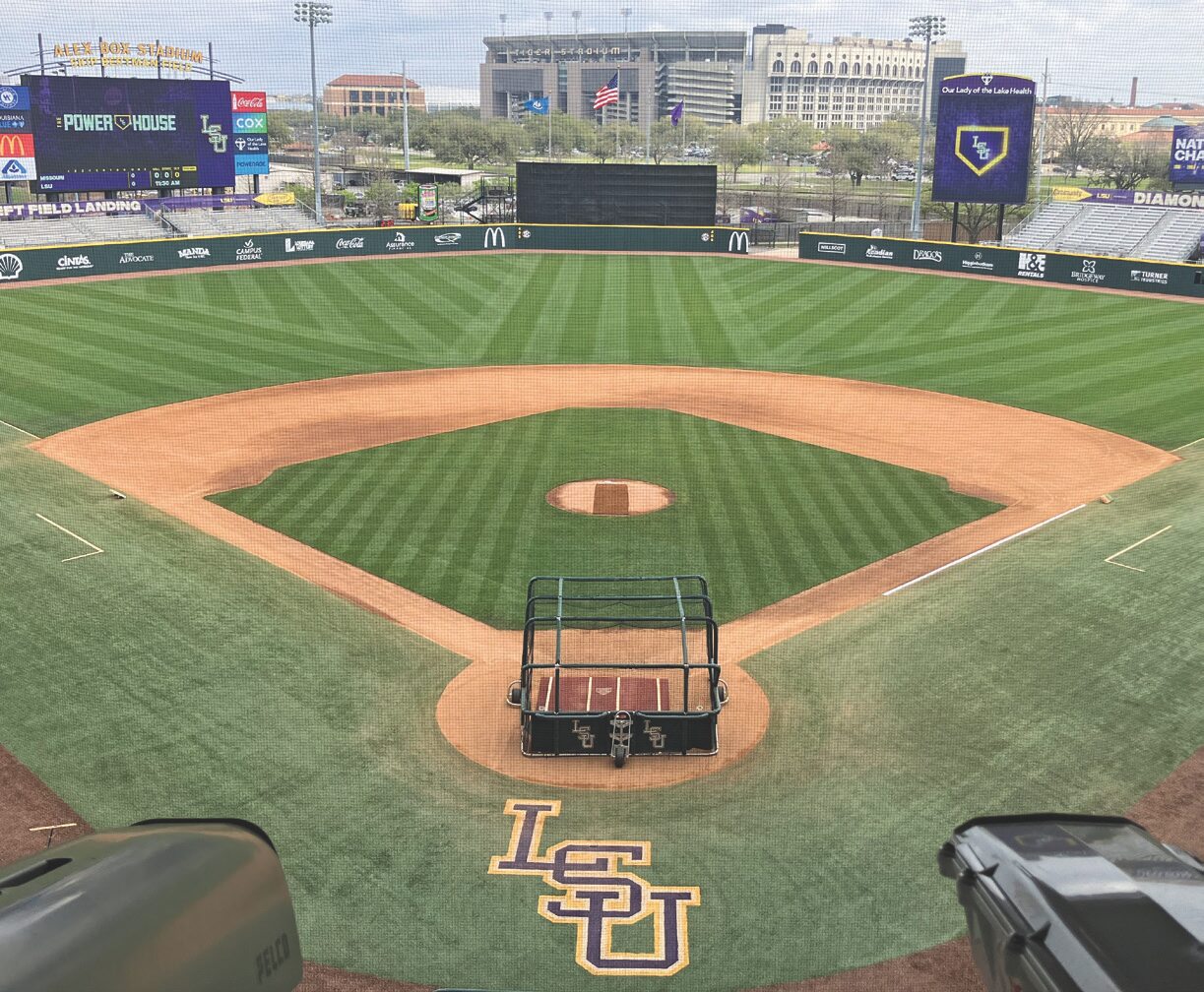
Alex Box Stadium at Skip Bertman Field
Louisiana State University
Alex Box Stadium at Skip Bertman Field is one of the most heavily used and abused fields in baseball. We just about have some form of play, camps, practice, events, etc., seven days a week. This gives us a unique challenge in fitting in our maintenance when we can. We must be creative and think outside the box to accomplish our goals. We would love to have a more timed approach to our maintenance, but that is just not feasible with the traffic we get on the field. Our crew works relentlessly day in and out to get it back into shape for the next day, then start the process over again. I truly believe we have the staff of champions at LSU, and the work shows it. Whatever the challenge is, we accept it and find a way to get the job done on time and efficiently.
– Jordan Billingsley, assistant sports turf manager
Level and category of submission: College and University Baseball
Field manager: Jordan Billingsley
Title: Assistant Sports Turf Manager
Education: Bachelor’s degree in Agronomy with emphasis on golf and sports turfgrass management
Original facility construction: 2009
Turfgrass: Celebration bermuda
Overseed: Ewing Empro perennial rye blend (34.82% Aspire perennial rye, 34.37% Hancock perennial rye, 29.13% Zoom 2 perennial rye, 0.24% other crop seeds, 1.44% inert matter)
Rootzone: Sand
Soil Amendments: Carbon Pro G
Drainage: Underdrainage network/vertical drainage system – perforated pipes wrapped in cloth in gravel-filled trenches
SportsField Management (SFM): Congratulations on the Field of the Year win. What are you most proud of with this win?
Jordan Billingsley: I am most proud of getting to see the whole thing come together, from start to finish. We came up with a game plan, trusted it and adjusted as necessary when needed. Getting to see the field progress throughout the year, keeping the playability at a high standard, and seeing it handle everything makes me the most happy.
SFM: What were the biggest challenges you have faced with the winning field, and how have you approached those challenges?
Billingsley: The biggest challenge that were faced, hands down, was the amount of play we get on the field daily. We had some form of play on the field just about every day of the year. From LSU games to practices, individual workouts, camps and tournaments, something was happening every day, and we had to constantly adjust our game plan and maintenance to ensure we were still able to produce a high-quality playing surface. If we had something pop up at the last minute that wasn’t on our schedule, then we had to get creative to find time to get out there when we had a window of opportunity. We worked with the baseball staff in these instances, and they were absolutely fantastic working with us to achieve our goals. It was all about teamwork from top to bottom.
SFM: Can you share a little about your overall management approach to the winning field and what you feel have been the most important aspects to getting this field to an award-winning level?
Billingsley: Our overall approach was to sit down, write a year-long maintenance plan that included any possible scenario we could think might happen. We write down the fertility plan, maintenance/cultural practices, when we think we would have the best opportunity to get it done, how long recovery might take, etc. The end goal was always to provide the absolute best product we could. The most important aspect to me is that you have to believe in what you are doing; trust yourself, trust your plan, trust your team, and go with it. Take the unforeseen circumstances as they come, don’t sweat the things out of your control, and just do the absolute best of your ability to make it happen. Everything after that will work itself out.
SFM: Please tell us about your crew, and anything else you would like us to know about your organization and the fields/facilities that you manage?
Billingsley: I spent the majority of my time at the baseball
facility because it was a very demanding position that required a lot of attention. I had two day-shift students to help prepare during the mornings and afternoons and another assistant would come and help as much as he could during the fall and summer. During the spring season, I had a handful of game day student workers, as well as an assistant who would help manage those student workers, maintenance practices, game flow, and tarp pulls. During fall, when football was going strong, I would have to get baseball prepared during the morning, then help the other crew at Tiger Stadium to prepare for the upcoming game that week. It was a very busy schedule, but it always kept things interesting.
SFM: Can you share a bit of insight into what the Field of the Year application process was like for you, as well as any tips you might have for other sports field managers?
Billingsley: I personally found the application process
enjoyable. It was so interesting to have to sit down and look at everything you have to do during the year to prepare for your season. It really puts things into perspective regarding how much it actually takes to maintain a high-priority facility. Sometimes you can get caught up just trying to get through the year and not realize how many hours you have put into your facility. I think it helped me realize that better changes can be made, and it was a great way to get started. The biggest tip I can give other sports field managers is the same thing I said earlier: make your plan, think of any possible scenario, and go enact your plan. Trust yourself, trust your plan, and trust your team. When everyone buys in, it makes it so much more fun and enjoyable.
The Field of the Year Awards program is made possible by the support of sponsors Carolina Green, World Class Athletic Surfaces and EPS.