An Emphasis on Excellence
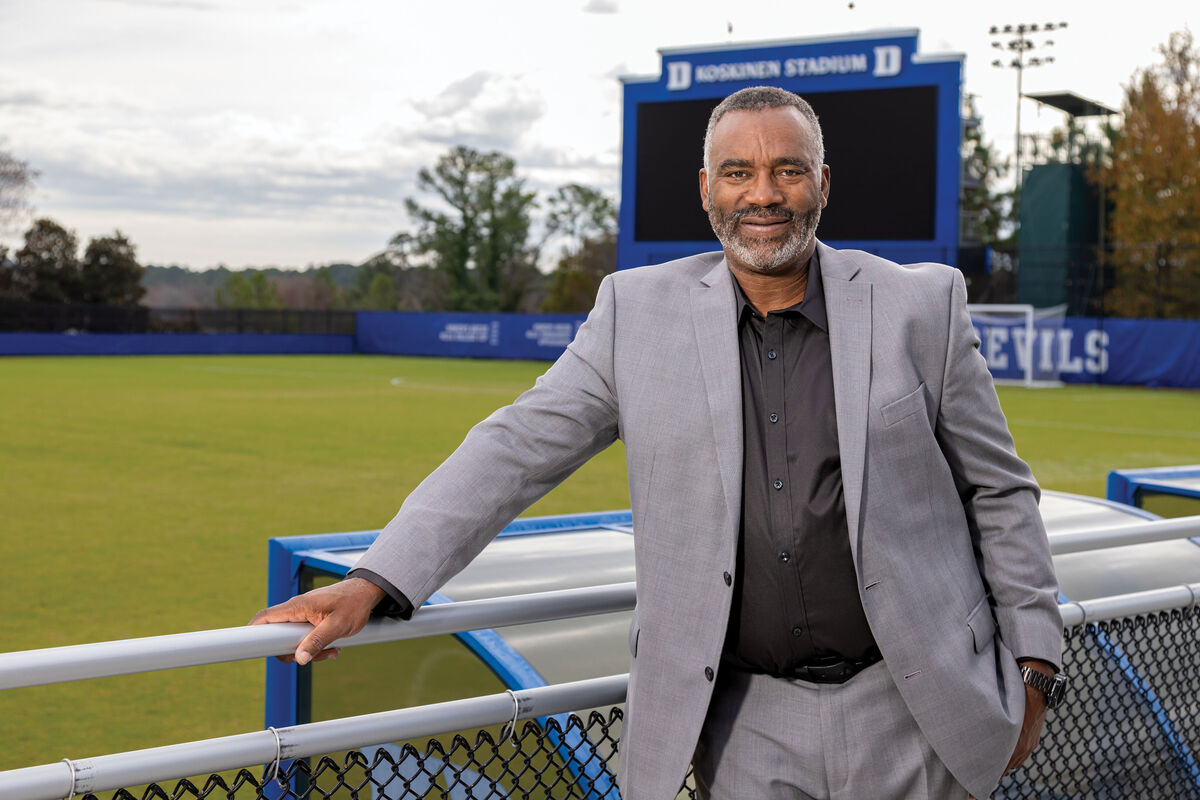
New SFMA President Alpha Jones, CSFM, looks to lead by example to help SFMA reach new levels of success
By John Kmitta
“Our association is evolving to where we truly stand out as the recognized leader in the sports field management industry,” said Sports Field Management Association (SFMA) President Alpha Jones, CSFM. “The direction that we’re headed as an organization is about getting it to a point of excellence so things are on the best level for the membership.”
According to Jones, those “things” include communication, transparency, response time, availability, connection between the national association and chapters, and partnering with other associations.
To help SFMA achieve those goals, Jones plans to lead by example.
“If I want to improve professionalism, I have to conduct myself professionally. If I want to see better communication and transparency, I have to be the first to do that,” he said. “As president, I cannot sit around and wait for somebody else to start that process.”
Jones added that he is honored to become president of the association and the opportunities it presents to impact the sports field management profession.
“To be thought of enough to be invited to be part of the board and then to be put in the position to be on the track to president is hugely humbling to me,” he said. “It’s hard for me to put it into words other than that I see it as an honor, and I don’t take that lightly because it’s a huge responsibility.”
This is also a historic moment for SFMA, as Jones becomes the first African American to serve as president of the association.
“By being the face of the organization, people who are of other ethnicities and other backgrounds can see that we’re not what we used to be,” said Jones. “That allows us to go into areas that we have not — such as urban schools or other predominantly minority situations — and represent the association. We can say, ‘Here’s somebody who looks and thinks like you, somebody you can look to and connect with, and perhaps even help you navigate some of the unknowns that come with going into uncharted territory.’”
Jones added that there are many minorities within the sports field management industry, but that they are just not members of SFMA. He feels that the name change the association underwent six years ago —from Sports Turf Managers Association to Sports Field Management Association — was the first step
to showing that anyone who works on a sports field is welcome as a member and can benefit from being a member.
“I’m very passionate about the work, about the people, and about creating the opportunity for the next person,” he said. “What possibly separates me from others who have held this responsibility is that I have followed a non-traditional path. There are other people out there who have followed an unconventional path and maybe haven’t been included. Just because you don’t have a degree in sports turf or you went about it a different way doesn’t mean you’re separate. You should be included in this. I bring an inclusive mindset for as many different groups as possible.”
THE UNCONVENTIONAL PATH
Having grown up in Pittsburgh, Jones was influenced from an early age by the blue-collar work ethic of the city.
“I was around a lot of people whose parents worked in the steel mills,” he said. “There was just the understanding that when we get up and put our boots on in the morning, we go to work. That was a big influence on me, and it’s something I’ve always carried with me.”
According to Jones, putting that work ethic into place eventually came with the realization that it could be done by using your brain more than using your back.
That cerebral approach to hard work was heavily influenced by his parents. Jones’s father is a retired pastor, and his mother is a retired teacher and principal — both serving as examples of leadership, ministry and education. Jones also credits his three sisters — Harriet, Karen and Lela — and the strong family bonds they share for shaping who he is.
Having played baseball through high school — to the point of eventually landing some Minor League Baseball tryouts — Jones set aside dreams of a baseball career and focused on a career in computer science with a desire to build computers and understand how they worked.
That led him to the University of Pittsburgh to study computer systems. He later transferred to Point Park College where he met his now wife of 38 years, Beth. The couple eventually moved to North Carolina and Jones began work in computer operations for North Carolina Mutual. The seeds of a career change began two years into his 5-plus years with the company, when a co-worker asked him if he knew anyone who cut grass. Jones didn’t know anyone he could recommend, but he knew how to mow a lawn. So he took the job, bought a used walk-behind lawn mower that he would load in and out of the trunk of his sedan, and went to work.
“We lived in an apartment on the second floor, so I would carry that mower up the stairs through the apartment and put it on the balcony outside,” said Jones.
Although he continued to work in computer operations, his landscape business continued to grow. He eventually made the leap to go full time into landscaping.
“It got to the point where I was picking up legitimate contracts with corporations,” he said. “We were handling 28 different stores between McDonald’s and Wendy’s corporations. That really helped establish the business. We were up to 11 employees at one point.”
Owning and operating his landscape company taught Jones how to wear many hats at the same time, how to write contracts, how to keep track of money, and how to adapt to various situations.
“If you go through enough failures and you want to be a winner, you’re going to figure out how to not fail the next time,” he said.
Running his business also showed him the importance of integrity and honesty when dealing with others, how to communicate with people at all levels, and the value of diversity in staffing.
However, by the late 1990s, the landscaping company that Jones and his wife had built was feeling the pressure from large landscape companies that were undercutting his business by offering deep discounts. Unable to compete, they eventually sold their business — but not before Beth found him a job as head groundsman for Durham Academy, a private school in Durham, North Carolina.
“I was very hesitant about the idea, because I really had grown to enjoy entrepreneurship,” he said. “But when I walked in for the interview, I saw two football helmets on the windowsill — one from the University of Pittsburgh, and the other from the Pittsburgh Steelers. The person conducting the interview was from Pittsburgh, and we hit it off right away.”
When Jones was hired by Durham Academy in 2002, he was initially under the impression that he would just be handling campus grounds, but it turned out that the position also included management of the athletic fields. Lacking knowledge in sports field management, Jones was reassured by his new boss that the school had a connection with the Durham Bulls.
“I met with the head groundskeeper of the Durham Bulls, and he impressed me right away with his passion for sports field management and the science behind it,” said Jones. “What should have been a 45-minute meeting turned into a three-hour conversation. At the end of the conversation, I filled out an application to work part time for the Durham Bulls in addition to my job at Durham Academy.”
The head groundskeeper of the Durham Bulls at the time was Jimmy Simpson, CSFM, who himself would go on to be president of SFMA.
“Jimmy is younger than me by close to 15 years,” said Jones. “He was going to school full time and taking care of a minor league ballpark. The things he showed me worked great, and I got kudos from the athletic director and the baseball coach. The bug had bit me at that point. I wanted to learn and I wanted to do more.”
Jones continued to work part time for the Bulls while still working full time at Durham Academy and also going to school full time at North Carolina Central University.
Fast forward a couple of years, and Simpson was hired by the Town of Cary, North Carolina, which charged him with revamping what is now WakeMed Soccer Park — home of the College Cup (the Final Four of college soccer).
“He reached out to me and asked me to come work for him,” said Jones. “So, after 5-1/2 years at Durham Academy, I turned in my resignation letter, and worked as crew lead for the team at WakeMed Soccer Park.”
While in that role, Jones learned how to build team culture.
“I thought that if I work hard, everybody else would just follow suit,” he said. “It doesn’t work that way. You have to inspire them to work as hard as they can. And you have to communicate so they understand not just what you’re doing, but why you are doing it.”
Jones worked for the Town of Cary for two years (in addition to having worked part time for nine years with the Bulls), then went to law school for a year before taking a full-time position with the Bulls. Eventually, Longwood University made Jones an offer he couldn’t refuse, and he became the assistant director of athletic facilities at Longwood University overseeing all outdoor athletic facilities. He spent 5-1/2 years in that role, commuting from North Carolina to Virginia.
From there, Jones and his wife started their own home renovation business, and he also worked as a baseball coach, PE teacher and health teacher.
“I was coaching the baseball team and teaching. When I finished work, if we didn’t have practice, I would drive to wherever the nearest repair job was,” he said. “We were doing a fair amount of renovations when my wife saw a job posting in Fayetteville, North Carolina. I walked in for the interview with the Fayetteville Woodpeckers and instantly had great rapport with the GM. I started in March of 2018, and my first day on the job was about six weeks before opening day in a brand new stadium. The whole field was just drainage rock, and the stadium was still under construction. I got to see the whole thing from start to finish.”
For the next 5-1/2 years Jones served as director of field operations for the Fayetteville Woodpeckers, Low-A (now Single-A) affiliate of the Houston Astros.
“It was an awesome experience,” said Jones. “It was challenging in the beginning. The first year they struggled to fill the staff before I got hired. The next year was the COVID year. But after COVID, our reputation grew and we were turning people away for part-time applications. People wanted to come work on the grounds crew. We built a nice core of people who put into practice the things I mentioned earlier, especially in terms of diversity.”
In late 2024, after 5-1/2 years in Fayetteville, Jones transitioned to Duke University where he currently serves as athletic field specialist with a focus on soccer and lacrosse. According to Jones, he was drawn to Duke by the opportunity to work in collegiate sports for a Power 5 school that has a reputation for excellence.
“The thing that it was always interesting when I look back on it now, is that I didn’t purposely leave jobs after five years,” said Jones. “But five to six years was my number for whatever reason. I’m very proud of the teams that I built — particularly in Fayetteville. I’m extremely proud that we won Head Groundskeeper of the Year in the Carolina League and then Head Groundskeeper of the Year at the national level for Low-A Minor League Baseball in the same year.
“It wasn’t that I had to move on,” he added. “It was always about what’s next. How do I get to the next level? Part of the challenge in sports field management is breaking that ceiling, and not just being the grass cutter, but being the administrator.”
THE NEXT LEVEL
What’s next for Jones is leading the way for SFMA and continuing to help others.
His connection to the association and his journey of service began with his connection with Simpson, who introduced Jones to STMA and the annual conference. That led to a pivotal decision in Jones’s journey.
“At the first conference I attended I found myself in a position to decide if I would be a wallflower and just try to fit in quietly, or if I would try to make something out of the opportunity,” he said. “I walked into the annual meeting room and there were several hundred people there. Just about everyone in the room was white. I didn’t think there was anyone I could identify with or connect with on a comfort level. But I decided to walk around and introduce myself.
In the years that followed, Jones continued to be exposed to the STMA and, more importantly, its members.
“Several years later I started to look back and see how many people played a role in my still being involved, the success that I was having, and the knowledge that I had gained by attending,” he said. “That was a full-circle moment for me thinking about the people who helped me. It made me want to start helping others.”
Jones’s first service to the association came as part of committees, which was a learning experience that taught him leadership skills in addition to showing him how to deal with people from throughout the country and how to relate to members. That ultimately led to Jones serving on the board of directors beginning in 2021.
His board service came at a time during which Kim Heck retired as CEO of the association, the transition to Laura Simmons, and then to a year without a CEO during which the board had to navigate all of the challenges the association faced during that time. From that experience, Jones took away that change is what you make of it.
“If you approach change as being difficult or you are not willing to think outside the box, then it’s going to be challenging,” he said. “If you’re more receptive to the idea that you don’t know what the end result will be, you can look at it as, ‘Here comes change, and the possibility of it being great is there if I step into the moment.’”
MORE THAN GRASS
Jones has devoted his career to creating safe playing surfaces and giving back to the sports field management industry. Outside of work and his role with SFMA, he has shared his own brand of leadership advice by authoring his “More than Grass” column in SportsField Management magazine.
According to Jones, he has done so to provide a different perspective in the hope that he can help others build upon their management skills. He now spends a lot of time with his son developing a business plan to extend the reach of the More than Grass brand through additional articles, public speaking engagements, podcasts and other related content opportunities.
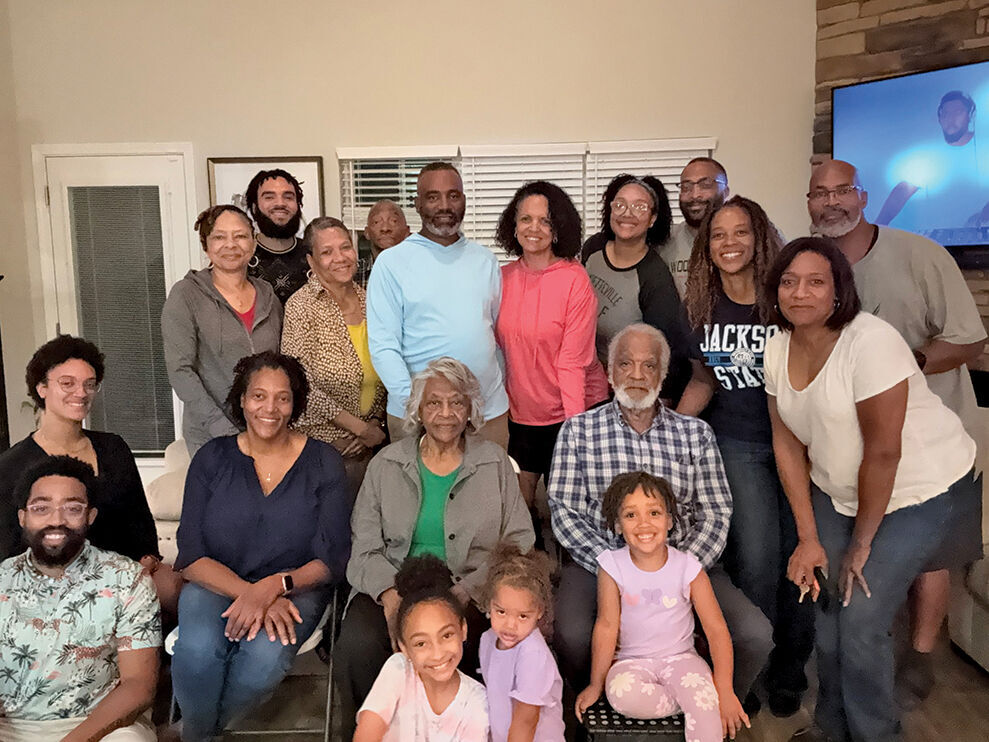
That familial effort is fitting, because getting to know Jones outside of work, and outside his role as association leader, begins with family.
“I was always on the grind, but my wife showed me how to make time,” said Jones. “She would plan a vacation trip right at the end of the Minor League Baseball season. My kids are now adults and I have three granddaughters. I’ve learned a higher level of appreciation for family.”
The loss of an uncle and a cousin during the past year have also led Jones to emphasize family and the value of time spent together.
“My daughters have me wrapped around their fingers,” he said. “They each have daughters. So if any of them needs or wants something, I jump.”
Jones’s youngest daughter lives just minutes away, his older daughter 40 minutes away, and his son lives in Durham, North Carolina.
“I try to make sure that I’m spending time with them doing things that they want to do or that they want to do with me,” he said.
Having worked as a professional drummer for 12 years, Jones also now busies himself following his son’s professional music career as a trombone player in the horn section for multiple bands.
Jones’s oldest daughter is the marketing coordinator for the International Civil Rights Center & Museum in Greensboro, N.C. (famous home to the lunch counter sit in), and his youngest daughter is a venue director.
Supporting all of them is Beth, who works as a pediatric oncology nurse for University of North Carolina Health.
“Behind every good man is a great woman,” he said. “She doesn’t like being the front person, so she’s okay with me being out front and doing all the talking. But she’s usually right there behind me. I’m only able to do what I do because of her.”
According to Jones, no discussion of his life and career would be complete without that emphasis on faith and family.
EXAMPLES IN LEADERSHIP
Now, as Jones steps into his moment as SFMA president, he also draws on the support of his SFMA family and lessons learned from Simpson and other SFMA past presidents.
“Jimmy is a bull in a china shop when it comes to the energy that he will put into something if he believes in it,” said Jones. “I was always a little mesmerized to be learning things from somebody who is 15 years younger than me — he has been that impressive upon me. His ambition influenced me. Jimmy was always trying to be better than he was at his previous job, better than yesterday. My conversations with him helped me hone my skills. And the number one thing is that he is loyal. He’s always going to be one of the first ones to call and check on you.”
In addition to Simpson, Jones also shared a bit about the influence of Dr. Mike Goatley, Tim VanLoo, CSFM; Abby McNeal, CSFM; Nick McKenna, CSFM; and Sarah Martin, CSFM.
“Dr. Goatley didn’t know me when I first got to Virginia, but he put himself out there and said, ‘Wherever you are, if you need my help, I’ll make an effort to see you,’” said Jones. “I was in a small town, Farmville, Virginia, and I reached out to him. It turned out he had a speaking engagement in a nearby town and he made an extra 30 minute drive to help me with a disease issue. That showed me that no matter the role of the member, give them your best effort, and make the time if you can. And when you do, be present for them. He made me really feel like I was the only person he was interested in at the time.”
Jones added that VanLoo encouraged him to take the CSFM exam.
“I could always hear him hear in the back of my head telling me, ‘You can do this. Just take your time and you’ll be fine.’ His encouragement got me through the CSFM and then helped me when it came to board service.”
McNeal’s advice and consultation, McKenna’s support and inspiration, and Martin’s attention to others have all shown Jones that the goal as president is to leave the association and the industry better than you found it.
“My vision for the SFMA is to see the standards of professionalism, public awareness, and industry leadership continue to grow successfully, and become the recognized true standard and authority in the sports field management industry,” Jones shared in his SFMA vision statement. “We can and must establish new recruiting tools that attract the ‘technology dependent’ generations, the person who is not sure of their future career choice, as well as former athletes who want better, safer, and aesthetically pleasing athletic facilities for their communities and schools. Focusing our outreach on the younger generations now will play a significant role in the vitality and longevity of our industry.”
To that end, Jones urges members to connect with local schools, speak with children and young adults, deliver presentations to classes and engage in other similar efforts.
Jones knows that the year as SFMA president goes by fast, but he looks forward to working as a team to continue striving for higher levels of excellence.
“We know the direction we want to go, and we are building momentum in that direction.”
John Kmitta is associate publisher and editorial brand director of SportsField Management magazine.